


Is Dream of the Red Chamber A Marxist Novel?
I know that this is a pretty provocative question, but I’ve been wondering about it for a while.
My wife asked me if Dream of the Red Chamber was a Marxist novel shortly after I told her that I decided to go forward with this project.
Now, on the face of things, this is a ridiculous question. The Communist Manifesto wasn’t published until February 1848, over 50 years after both the first and second editions of Dream of the Red Chamber were originally published.
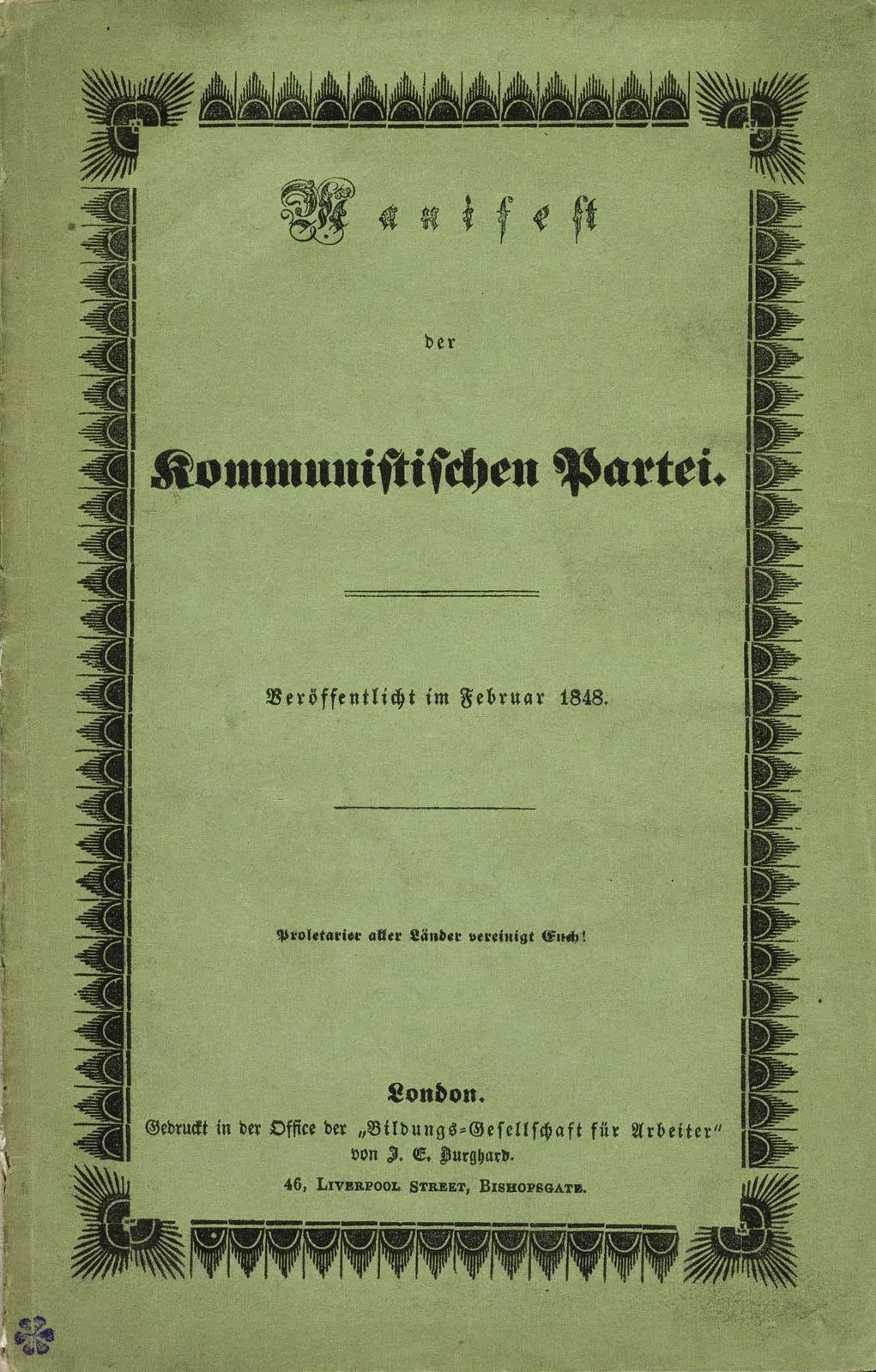
But that doesn’t mean that a Marxist interpretation of Dream of the Red Chamber is inappropriate.
In fact, there was a time in China where you absolutely had to read Dream of the Red Chamber through a Marxist lens.
This helps explain parts of the introduction to A Dream of Red Mansions, the translation by Gladys Yang and Yang Hsien-yi that was published in Beijing back in 1978.
This introduction is missing in most of the subsequent editions published by Foreign Languages Press in Beijing, and the reason why is pretty obvious:
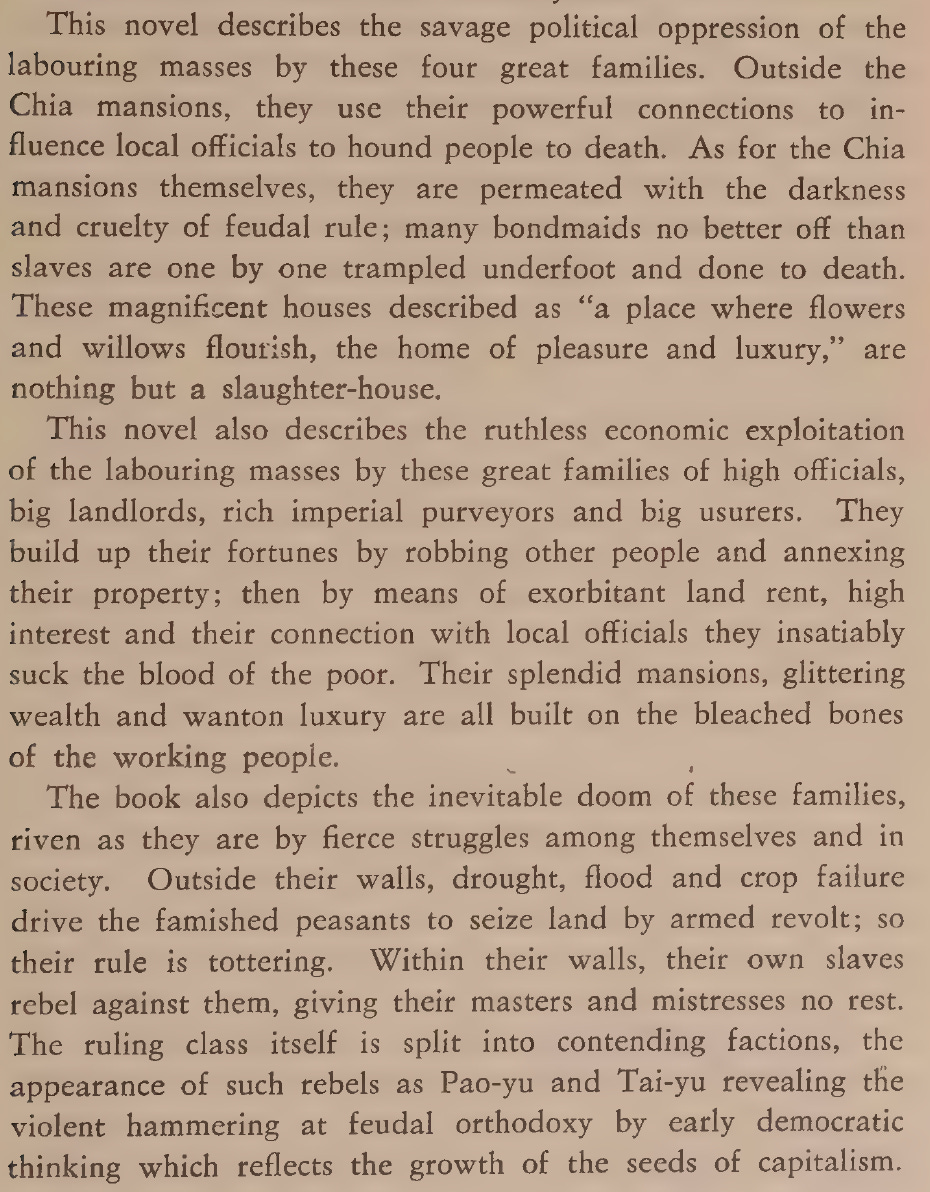

This continues, by the way:
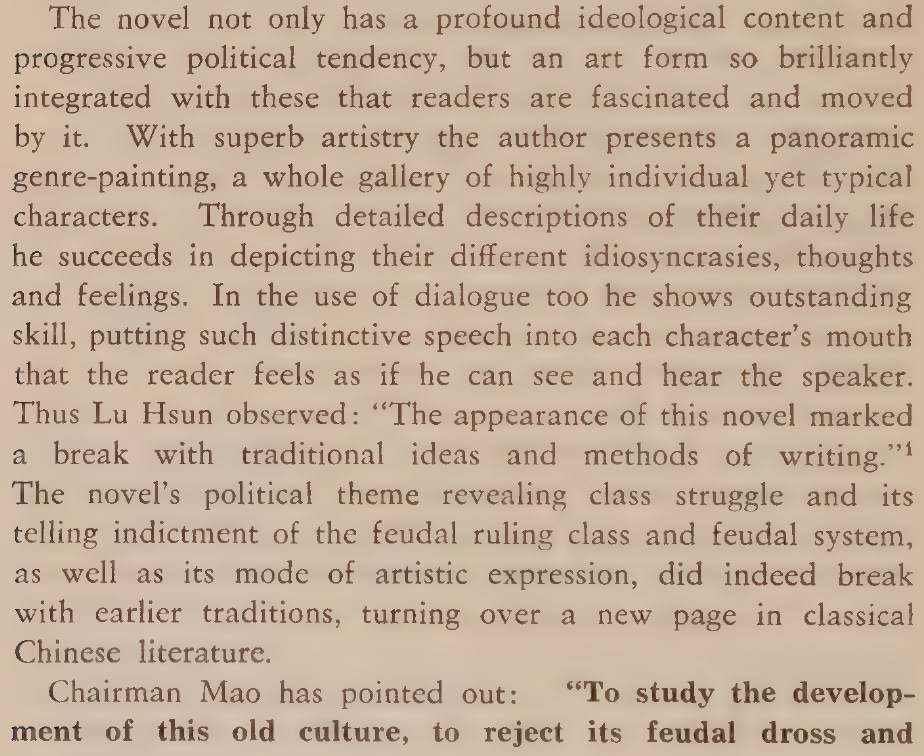
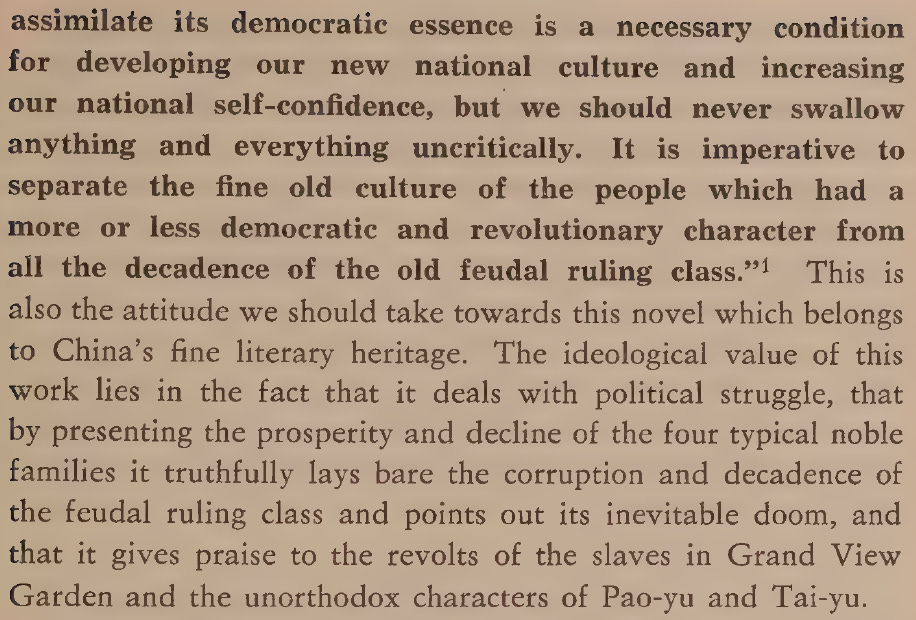
Now, there are a few aspects of this interpretation that are correct. For example, the writer of this note is correct that Cao Xueqin was fully cognizant of the huge disparity in wealthy between the extremely wealthy families in described in this book and the plight of the common people.
This is why characters like Granny Liu are so memorable:

Now, the truth here is that a Marxist interpretation doesn’t really fit in as nicely as the political pundits would like.
There’s no massive movement by the downtrodden masses to overthrow their oppressors and reform the society. In fact, any disillusion that Jia Baoyu and Lin Daiyu supposedly feel towards feudalism probably is more a mirror of the story of Siddhartha Gautama (i.e. the Buddha) than anything Marxist in nature.
Are we supposed to conclude that any commentary on economic inequality is therefore Marxist in nature? Does somebody like Wang Anshi become an honorary Marxist just because he had a few ideas about equality that might have been acceptable to later political pundits?
At the same time, though, you can’t ignore the fact that Dream of the Red Chamber is clearly filled with obvious economic commentary, including quite a bit of irony.
Take the funeral of Qin Keqing that we’re currently in the middle of, for example. She was given an extremely ostentatious funeral for suspicious reasons, though it’s almost certainly the case that her father-in-law, Jia Zhen, felt personally responsible for leading her to her death. The only way she could legally have a funeral like this was because her widower, Jia Rong, received an honorary title after her father-in-law paid off the appropriate bribe.
There’s no possible way that we could not see this as a commentary on the corruption and economic reality of the times. In fact, Cao Xueqin brings out so many of these obvious and clear comments on the times he lived in that you simply can’t ignore them. It’s a piece of stark reality that slaps you in the face every time you open up the book.
Again - I think that the anonymous Publisher’s Note is a bit over the top when it says things like this:
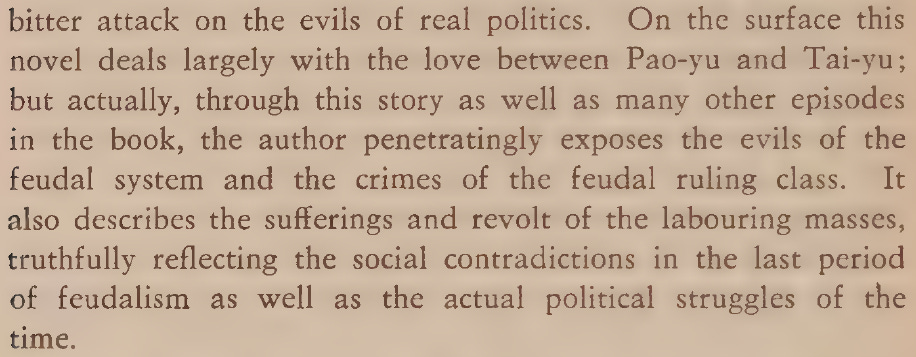
However, I do agree that this is far from just a conventional love story.
You can read it as a critique of the “feudal ruling class” if you like. But you can also read the book as a critique of the oppression of women, or of the emptiness of overly formal religious rituals, or of how far the national culture of Confucianism had strayed from the original words.
If you really want, you can also read the book as a great critique of the literature of the times. After all, there’s a reason the book remained popular through and after the revolutionary period of Chinese literature in the late 1910s and the fall of the Qing Dynasty.
That’s the most fascinating thing about Dream of the Red Chamber. It’s a book that invites itself to all sorts of possible interpretations - and there’s really not a single interpretation that is right.
Anyway, I’d love to know what you think about all of this. I originally thought of turning this into a video, but I’m afraid that we’re still not quite far enough in the text to make it as coherent as I’d like it to be.

