


Lin Yutang on Dream of the Red Chamber
I saw a post on X the other day about Lin Yutang:


If you’re like me, you probably don’t know who Lin Yutang was. A native of Fujian Province, Lin managed to study at Harvard University in the 1920s, later went on to receive a doctoral degree at the University of Leipzig, and wound up becoming a pivotal figure in the New Culture Movement.
Rather than flatly rejecting China’s literary and cultural heritage, however, Lin wound up immersing himself in the study of Confucianism. And this is where My Country and My People came from, one of his best known works:
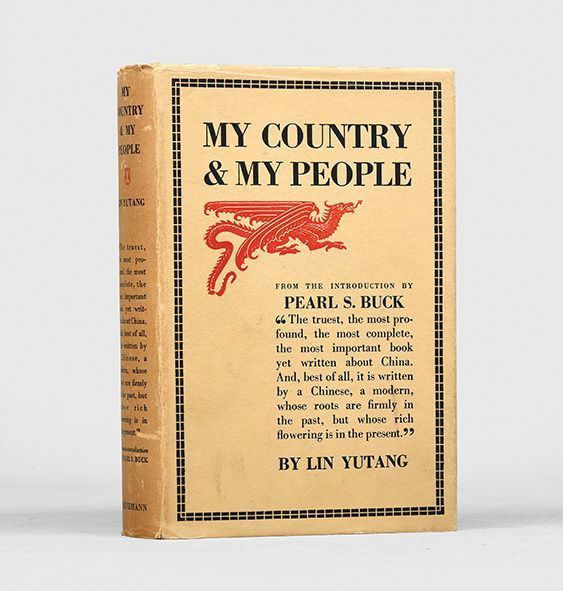
Of course, Lin Yutang wrote at a time when any opinion on literature was destined to be directly tied with politics. Based on the snippets I’ve read, it seems that Lin was particularly concerned with the political undertones of the new Chinese literary movements of his time.
Anyway, sometime in the mid-1970s Lin Yutang wrote a brief piece about Dream of the Red Chamber that was published in the Spring 1974 issue of a literary journal called Renditions. I’ve come across a PDF copy of his brief article, and thought it might be interesting to point out some of his insights.
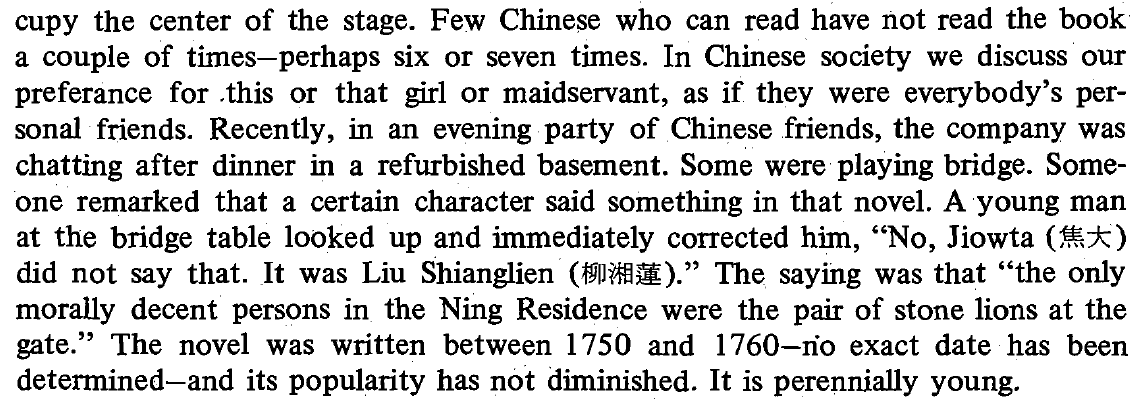
For example, Lin Yutang shows just how widely read and enjoyed Dream of the Red Chamber had become by the mid-20th century in China:
Lin also comments in some detail on the vivid and extremely well described characters of the novel:
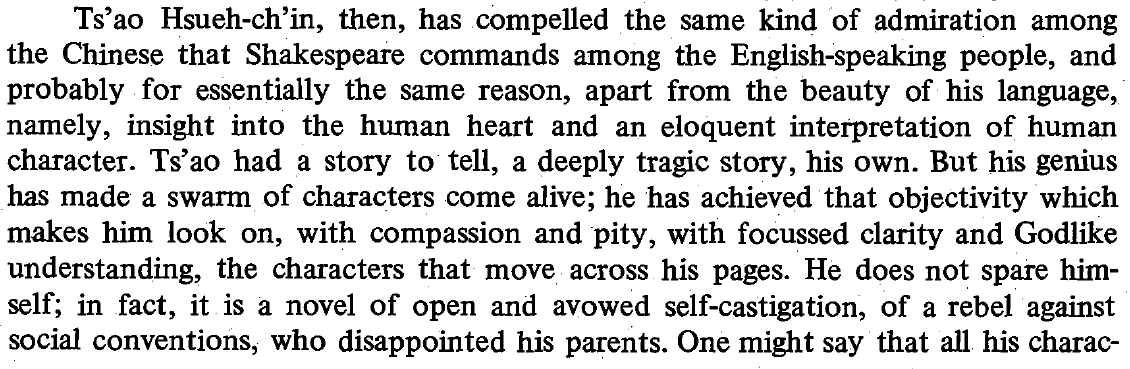
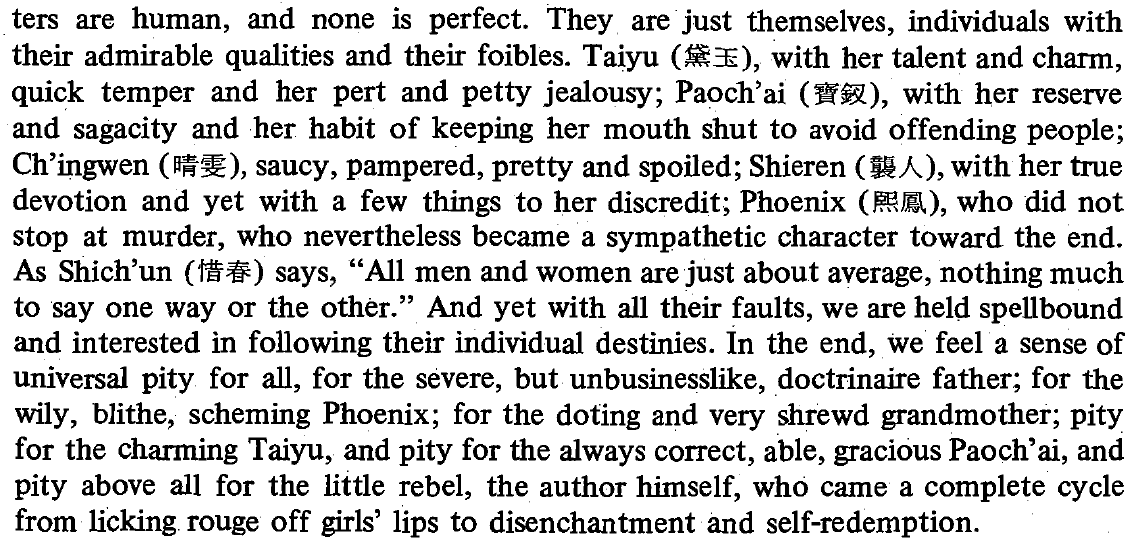
And then there’s Lin’s brief description of Cao Xueqin’s narration method, which is something that we talked about in a commentary post just a few days ago:
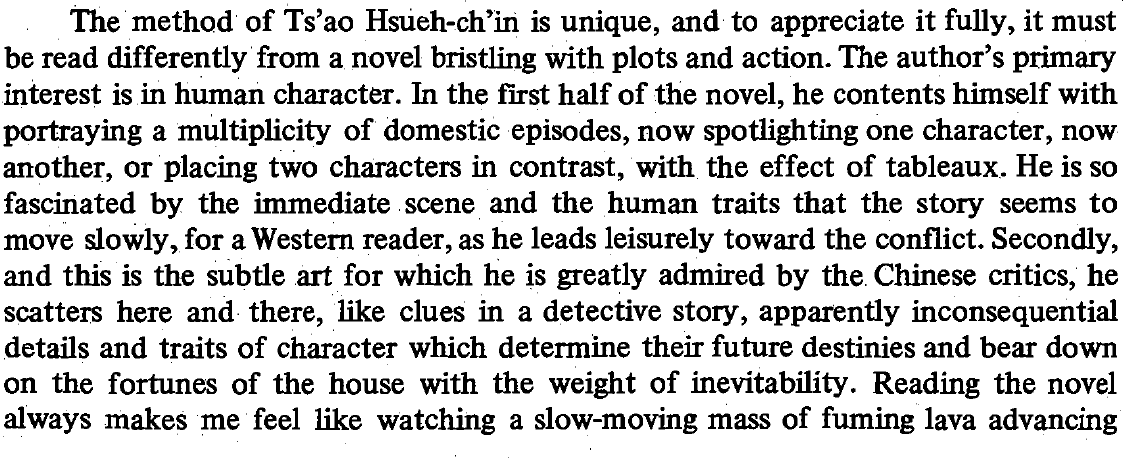

Now, I should note that I don’t entirely agree with Lin’s description of the novel. He approaches the text as if it were a sort of Buddhist tract, and then uses all sorts of Christian symbolism in an attempt to understand the character of Jia Baoyu. In other words, it feels like Lin tries to read a lot into Dream of the Red Chamber that isn’t actually there.
Having said that, though, Lin’s general description of the novel is brilliant.
Awesome. Interesting (and I think fair!) take on Lin Yutang's assessment.
Your post reminded me of one of his observations in My Country and My People: "The easiest way to find out a Chinaman’s temperament is to ask him whether he likes Daiyu more or Baochai more. If he prefers Daiyu, he is an idealist, and if he prefers Baochai, he is a realist."
I've collected this and other quotes about Dream of the Red Chamber (including several from Lin Yutang and others across the centuries) here: https://en.wikiquote.org/wiki/Dream_of_the_Red_Chamber#Quotations_about_Dream_of_the_Red_Chamber. Might be worth a quick look if you're interested.