


Pinyin
It’s kind of hard to believe these days, but there was once a time when using Pinyin to write romanized Chinese was almost like a political statement.
In fact, Pinyin was so fraught with controversy that even Gladys Yang’s A Dream of Red Mansions used the old Wade-Giles convention.
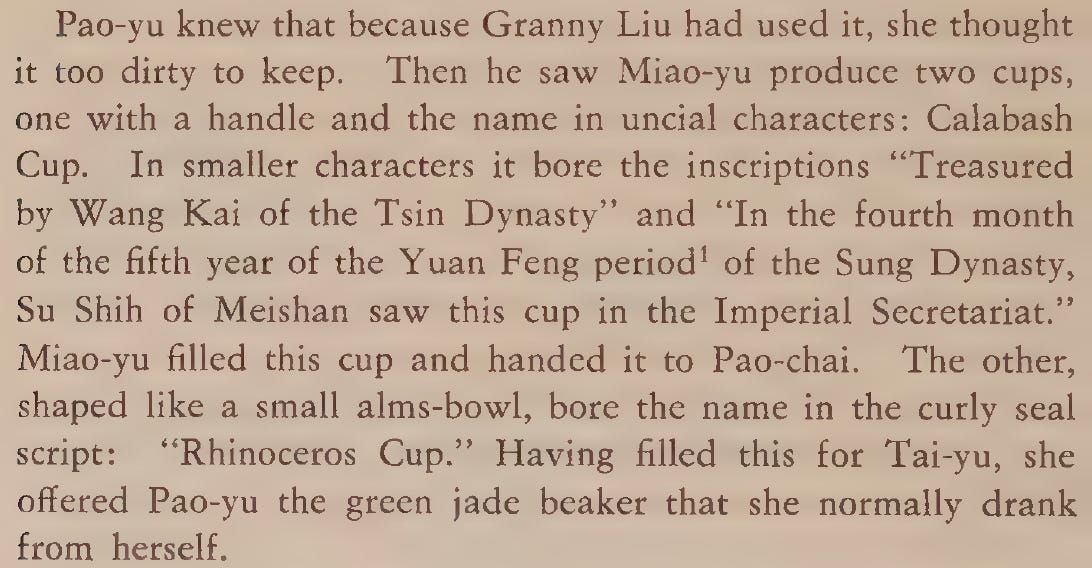
Wade-Giles, of course, is pretty confusing, especially if the person writing the article or translation or book or whatever it is neglects to use the apostrophes. And, well, it turns out that the Yangs didn’t bother to worry too much about apostrophes in their translation of Dream of the Red Chamber:
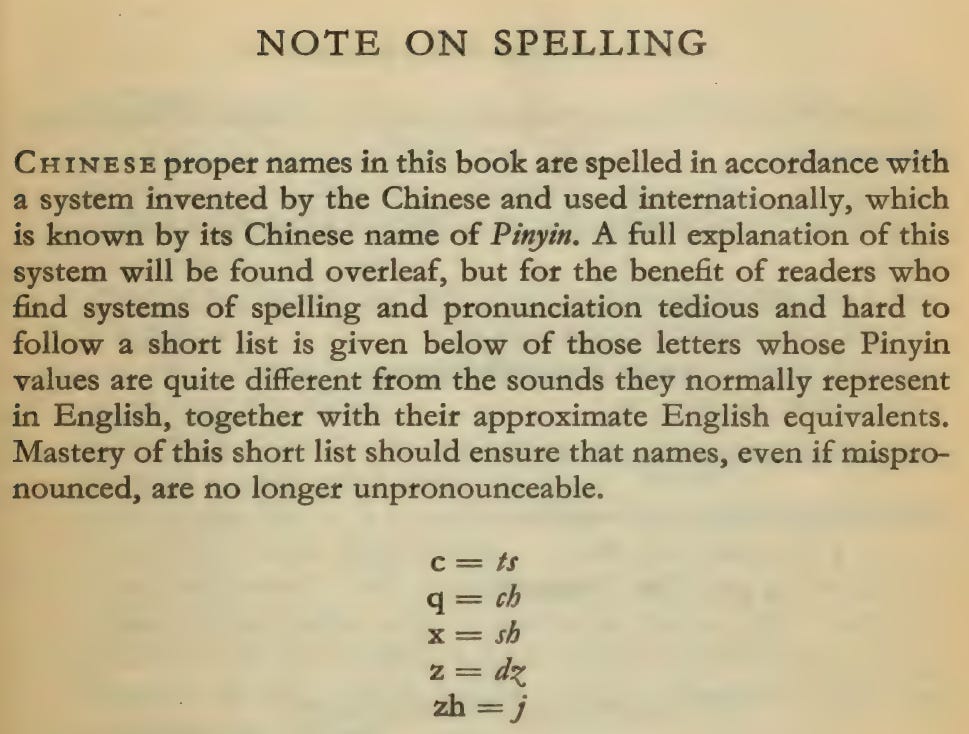
Though his translation avoided a lot of the Marxist overtones that the Yangs were forced to use in theirs, David Hawkes decided to use Pinyin instead of the Wade-Giles tradition. And, of course, back in the 1970s Pinyin wasn’t really understood all that well, prompting Hawkes to include notes like this in the beginning of many of the volumes of The Story of the Stone:
Now, if you spend a lot of time digging through older books on Chinese history, you’ll realize just how pervasive (and confusing) Wade-Giles really was. My favorite example of this is The Cambridge History of China. The history is fantastic, but the romanization leaves a lot to be desired:
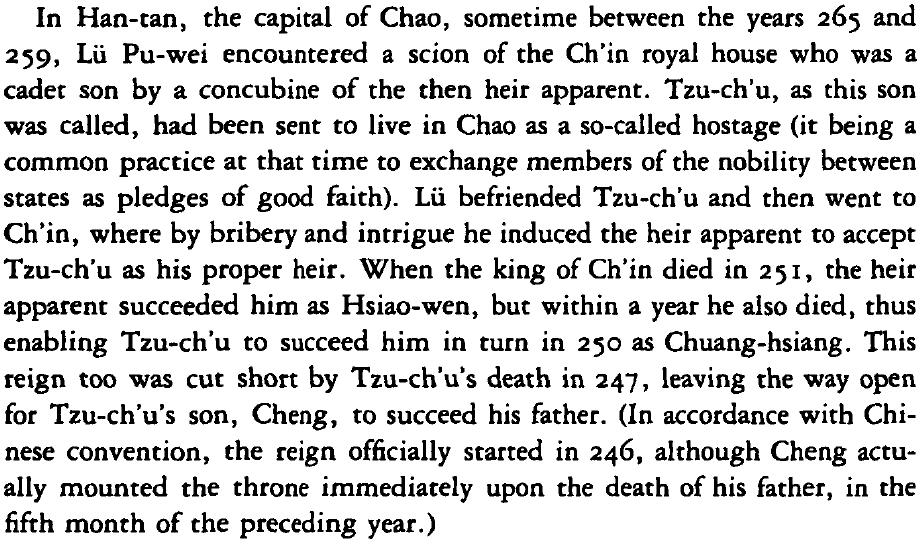
I mean, Wade-Giles isn’t necessarily awful, and it’s not as hard to switch between it and Pinyin as you might think at first. But still, you get the feeling with Wade-Giles that every single word starts with a t or ch or tz or ts, and the apostrophes are just annoying after a while.
Anyway, all this and more is the topic of my latest video:
All I can say is that I’m happy to have Pinyin. The alternative is anything but pretty.