


The Bribe
Our translation passage today is actually a really interesting anecdote with all sorts of direct mentions of bribery. It also makes you wonder just what Cao Xueqin thought about the religion of his day. After all, it’s not every day you hear about a nun offering a massive bribe.
My Translation
Meanwhile, Wang Xifeng went to her room to rest, and the nun went along with her. Since there was nothing else going on, the older maids had left to rest, leaving only a few younger and trustworthy maids behind.
Jingxu seized the opportunity to say what she wanted. “There’s something I’d like to ask Grandmother Jia about at the mansion,” she said. “But could you please give me some advice first?”
“What is it?” asked Xifeng.
“Praise Buddha!” replied Jingxu. “It’s just that, when I first became a nun, I was at the Shancai Convent in Chang’an County. We had a donor there whose name was Zhang; he was very rich.
“He had a daughter who we called Jin Ge who came to burn incense at our convent. And it just so happened that she was seen there by the younger brother of the Prefect of Chang’an, a man named Mr. Li. Mr. Li took one look at Jin Ge and fell in love with her. And so he sent someone right away to propose marriage.
“But it just so happens that Jin Ge had already accepted the proposal of the son of the former Brigadier of Chang’an. The Zhangs thought about calling off that engagement, but they were worried that the Brigadier would be upset. And so they said that she was already engaged.
“But who would have thought that Mr. Li still insisted that he needed to marry her? And so the Zhang family was caught in a difficult situation and couldn’t do anythingt o solve the problem.
“And then, unexpectedly, the Brigadier’s family heard this news. Without looking into what was right and what was wrong, they started a massive argument. ‘She’s only one girl,’ they said, ‘and yet how many families are you going to promise her to?’ They absolutely refused to allow their engagement gift to be returned, and so the problem has gone to the courts.
“Anyway, the girl’s family is very worried. They sent people up to the capital to find some connections to solve the problem. They’re also furious and are insistent on returning the engagement gift.
“Now, I know that General Yun, the Military Governor of Chang’an, is a good friend of your family. I was wondering if you might ask Grandmother Jia and the master to write a letter to him to ask him to have a word with the Brigadier. I doubt he would dare refuse. If you are willing to help, the Zhang family would do whatever it takes, including spending their entire fortune in gratitude.”
“That sounds like a small matter,” said Xifeng with a smile. “I think it’s probably too minor for Grandmother Jia to intervene.”
“If she won’t handle it,” replied Jingxu, “perhaps you could take care of it.”
Xifeng laughed. “I don’t need the money,” she replied, “and I don’t do this sort of thing.”
When Jingxu heard this, she lost all hope. She was silent for a few moments. Then she said with a sigh, “Even though you say that, the Zhangs already know that we were going to ask your house for help. At this point, if we don’t do anything, they won’t say that you have no time or that you don’t care for their reward. They’ll think that your house doesn’t even have enough influence to help a little matter like this.”
Xifeng’s head perked up at once when she heard this. “You’ve known me for a long time,” she replied. “And you know that I’ve never believed in all that talk about hell or retribution. Whatever I say I’ll do, I’ll do it. Tell them to bring me three thousand taels of silver, and I’ll help them get this weight off their chests.”
Jingxu was delighted when she heard this. “We have the money!” she said. “That will be no problem at all.”
“I’m not like those other people who engage in crazy schemes just to get money,” added Xifeng. “These three thousand taels are merely to cover the travel expenses for the servants I’ll send to deliver the message, and allows them to earn a little bit of money on the side. I won’t take a penny of it. After all, even if we were talking about thirty thousand taels, I could get it right now.”
“I see,” replied Jingxu. “In that case, ma’am, could you be so kind as to begin tomorrow?”
“Look at how busy I am!” said Xifeng. “Is there anything I could stop doing? Now, since I promised you, I’ll naturally see it through.”
“A little thing like this would have most people so busy that they’d become confused,” replied Jingxu. “However, for you, ma’am, even if I were to add a little bit more, it wouldn’t be enough to keep you busy for long! Just as they say, ‘the able are always busy.’ Grandmother Jia sees how talented you are, and so she adds more and more things to you. But you must remember to take care of your precious health.”
With this steady stream of flattery, Xifeng felt more and more gratified. She no longer felt tired, and continued to chat.
Translation Critique
Hawkes
David Hawkes translates the 善才庵 as “The Treasures in Heaven Convent.” This is actually a really good translation, and conveys the same irony as the original Chinese text.
We see another difficult word in Hawkes’ translation here. He describes how Jingxu’s “face assumed an expression of great benignity.” If you’re like me and have no idea what benignity means, it refers to the state of being benign, or “kind, gentle, or mild.” The problem, of course, is that the Chinese text says 打去妄想, which means something like “her vain hopes were dashed away,” with nothing about Jingxu having a benign expression on her face.
Hawkes translates 能者多勞 as “the able man gets little leisure.” It’s a good enough translation of the idiom.
Yang
The Yangs opt for a more literal translation of 能者多勞: “The abler a man, the busier he gets.” Overall, their translation of this section seems to be a lot more faithful to the original text.
Chinese Text
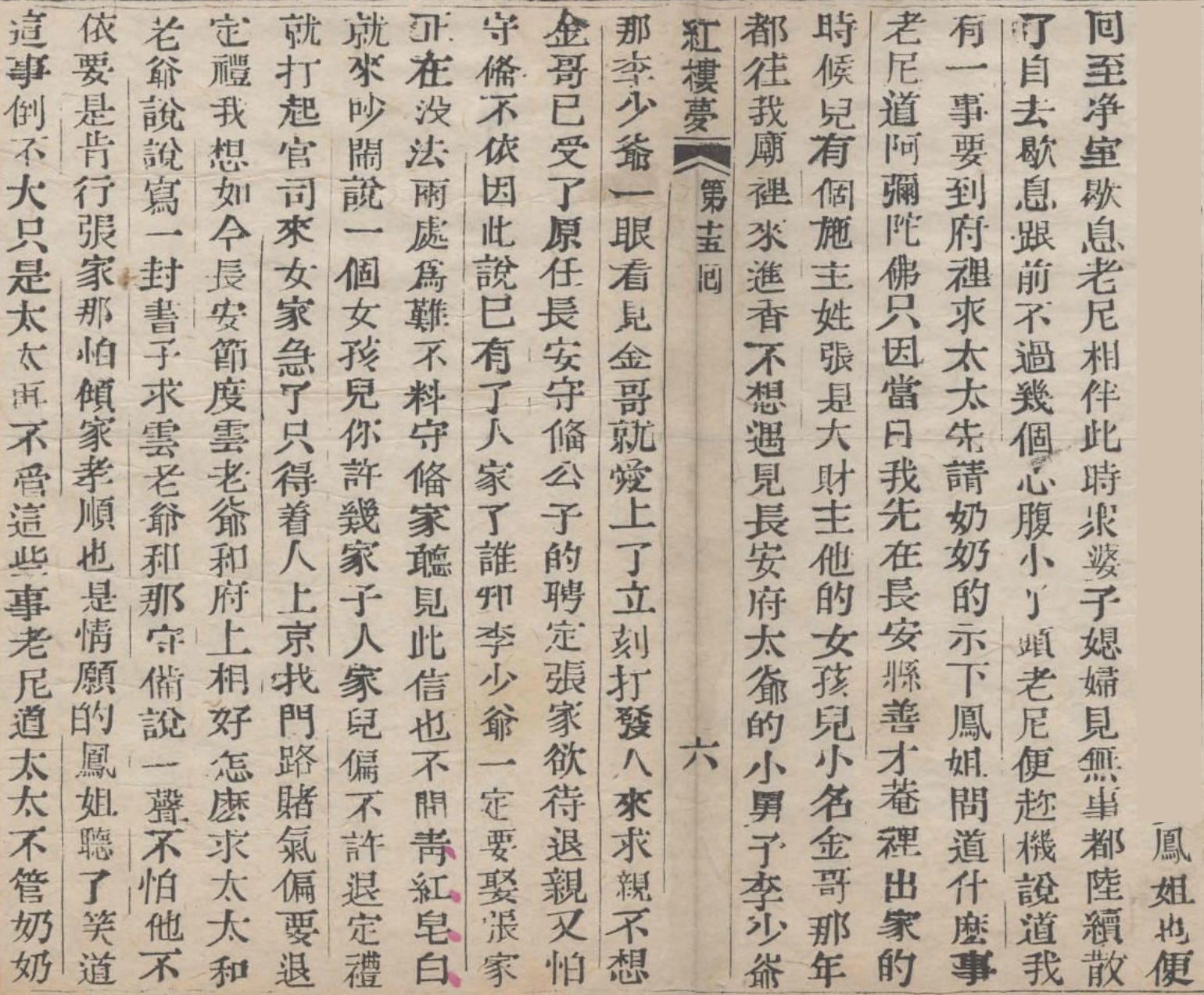
鳳姐也便回至淨室歇息,老尼相伴。此時眾婆子媳婦,見無事,都陸續散了,自去歇息,跟前不過幾個心腹小丫頭。老尼便趁機說道:「我有一事,要到府裡求太太,先請奶奶的示下。」鳳姐問道:「什麼事?」老尼道:「阿彌陀佛!只因當日我先在長安縣善才庵裡出家的時候兒,有個施主姓張,是大財主。他的女孩兒小名金哥,那年都往我廟裡來進香,不想遇見長安府太爺的小舅子李少爺。那李少爺一眼看見金哥,就愛上了,立刻打發人來求親。不想金哥已受了原任長安守備公子的聘定,張家欲待退親,又怕守備不依,因此說已有了人家了。誰知李少爺一定要娶。張家正在沒法,兩處為難。不料守備家聽見此信,也不問青紅皁白,就來吵鬧,說:『一個女孩兒,你許幾家子人家兒?』偏不許退定禮,就打起官司來。女家急了,只得著人上京找門路,賭氣偏要退定禮。我想如今長安節度雲老爺和府上相好,怎麼求太太和老爺說說,寫一封書子,求雲老爺和那守備說一聲,不怕他不依。要是肯行,張家那怕傾家孝順,也是情願的。」鳳姐聽了,笑道:「這事倒不大,只是太太再不管這些事。」老尼道:「太太不管,奶奶可以主張了。」鳳姐笑道:「我也不等銀子使,也不做這樣的事。」靜虛聽了,打去妄想,半晌,嘆道:「雖這麼說,只是張家已經知道求了府裡。如今不管,張家不說沒工夫,不希圖他的謝禮,倒像府裡連這點子手段也沒有似的。」
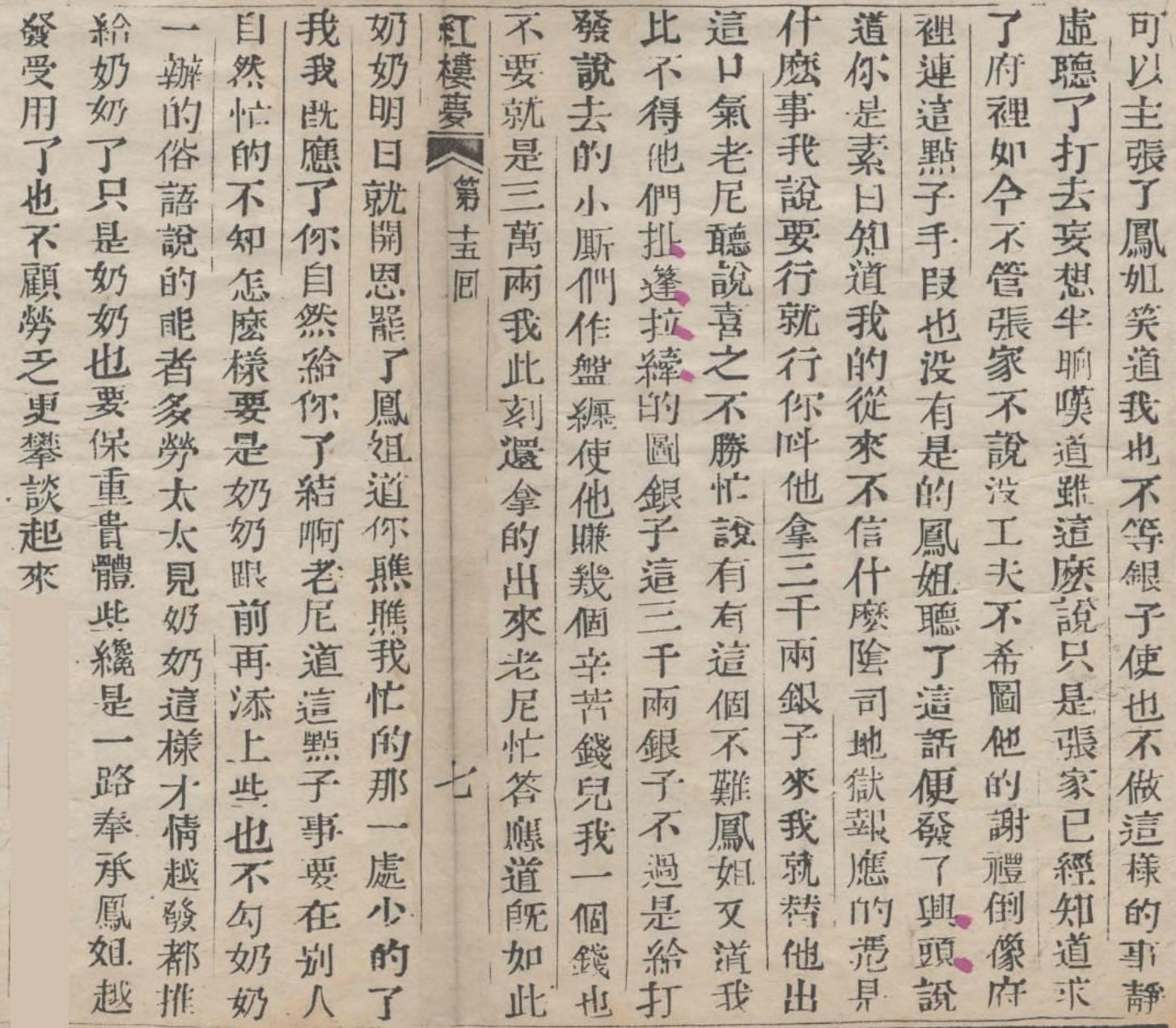
鳳姐聽了這話,便發了興頭,說道:「你是素日知道我的,從來不信什麼陰司地獄報應的。憑是什麼事,我說要行就行。你叫他拿三千兩銀子來,我就替他出這口氣。」老尼聽說,喜之不勝,忙說:「有,有。這個不難。」鳳姐又道:「我比不得他們扯篷拉縴的圖銀子。這三千兩銀子,不過是給打發說去的小廝們作盤纏,使他賺幾個辛苦錢兒,我一個錢也不要。就是三萬兩,我此刻還拿的出來。」老尼忙答應道:「既如此,奶奶明日就開恩罷了。」鳳姐道:「你瞧瞧我忙的,那一處少的了我?我既應了你,自然給你了結啊。」老尼道:「這點子事,要在別人,自然忙的不知怎麼樣;要是奶奶跟前,再添上些,也不夠奶奶一辦的!俗語說的:『能者多勞』。太太見奶奶這樣才情,越發都推給奶奶了,只是奶奶也要保重貴體些才是。」一路奉承,鳳姐越受用了,也不顧勞乏,更攀談起來。
Translation Notes
老尼 means “the old nun,” and clearly refers to 靜虛 (Jing Xu).
心腹小丫頭 refers to younger maids that Wang Xifeng trusted (心腹 means trustworthy person).
示下 means advice or instruction
善才庵, or the Shancai Convent, seems to be a name of a fictional convent. Shancai (善才) is the Chinese transliteration of Sudhanakumāra, or Sudhana, which is translated as the Child of Wealth. The name is also written 善財. Choosing this figure is probably ironic because of what Jingxu is trying to do here.
施主 means an alms giver or a donor.
金哥 (Jin Ge) literally means “golden older brother.” It’s kind of an odd name for a girl, and seems to indicate that the Zhang family is not particularly refined despite being wealthy.
聘定 means a marriage proposal.
青紅皁白 litereally means “wheat and chaff.” It’s a common idiom that means “right and wrong.”
找門路 means to find a way to solve the problem. The implication here is that they’re going to find someone with connections who can make this legal headache go away.
傾家孝順 is kind of a complex phrase here. 傾家 means for one’s family, or family fortune, to be completely overturned. 孝順 means to be dutiful and obedient, as if you were obeying a parent. In this case, 傾家孝順 works as an euphemism: they’re basically saying “even if it bankrupts us, we would be more than happy to show you this great devotion for your help.” It’s not an outright bribe, but it’s obvious from the context that they’re talking about a bribe.
打去妄想 means that her wild hopes were struck away. 妄想 means a vain hope, as in a hope that really has no chance of coming true.
半晌 here implies that Jingxu was silent for a while, though it doesn’t outright say that she was silent.
扯篷拉縴 means to set up a sail and pull a towline. Here it’s an idiom that refers to acting as a broker or a go-between in various shady deals.
能者多勞 is an idiom that means “able men are always busy.”
It is fascinating how many Chinese classics cover the shady relationship between wealthy patrons and temple leaders. This is all over The Scholars and a key part of Lu Zi Shen’s storyline in The Water Margin (Lu Zi Shen is able to evade the law due to a rich guy installing him at a monastery where the guy is a generous donor).
"...He had a daughter who we called Jin Ge who..." (「他的女孩兒小名金哥...」)
Shouldn't it be "His daughter's pet name is Jinge..." or "His daughter, whose pet name is Jinge, came to..."?
------
“It’s kind of an odd name for a girl, and seems to indicate that the Zhang family is not particularly refined despite being wealthy.”
Nothing odd for a pet name, especially back then when Chinese commonly believed 「賤名好養活」, many children had much less flattering pet names, such as 「黑妞」「狗剩」or「狗蛋」(https://baike.baidu.com/item/%E8%B3%A4%E5%90%8D%E9%95%B7%E5%91%BD/8560162). Those who wanted a son might name their daughter(s) 「招弟」「来弟」「盼弟」, like in the novel 《豐乳肥臀》. In the Yuan dynasty play 《李雲英風送梧桐葉》a girl was named 「金哥」(「...教你同金哥妹子共求佳配。你是他姐姐,索先問你...教你引金哥妹子登綵樓拋繡球...」). Back in the 80s & 90s, it was not uncommon for parents named their daughter 「亞男」or「勝男」 too.
------
"...younger brother of the Prefect of Chang’an..." (「...長安府太爺的小舅子李少爺...」)
「小舅子」means "brother-in-law" (the younger brother of one's wife).
------
“...they were worried that the Brigadier would be upset...” (「...張家欲待退親,又怕守備不依...」)
「不依」here means "to dissent; to reject" (https://www.zdic.net/hant/%E4%B8%8D%E4%BE%9D).
------
"...if you might ask Grandmother Jia and the master..." (「...怎麼求太太和老爺說說...」)
"“I think it’s probably too minor for Grandmother Jia to intervene.”" (「...只是太太再不管這些事...」)
"Grandmother Jia sees how talented you are..." (「...太太見奶奶這樣才情,越發都推給奶奶了...」)
Not Grandma Jia, but ma'am Wang, the wife of Jia Zheng. Jingxu obviously knew who's de facto making the call in RGM. She left some more detailed business to Xifeng but still was the one in charge of many family affairs.
There was nothing for Grandma Jia to do or to delegate to Xifeng. It had to be ma'am Wang (chapter 6:「...但如今家內雜事太煩,太太漸上了年紀,時想不到也是有的。況是我近來接著管些事,都不知道這些親戚們...」).
------
"青紅皁白 litereally means “wheat and chaff.” It’s a common idiom that means “right and wrong.”"
Literally it refers to four colors: teal, red, black and white (https://www.zdic.net/hant/%E9%9D%92%E7%B4%85%E7%9A%82%E7%99%BD).
------
"Whatever I say I’ll do, I’ll do it." (「...憑是什麼事,我說要行就行。」)
It's more like "No matter what sort of matter it is, I can make it happen if i want.". This line shows how confident or over-confident she was.