


The Prescription
I’ve done the best I could here, and am relying pretty heavily on a variety of translation sources and David Hawkes’ translation for some of the traditional Chinese medicine terms in this section. We’ll take a closer look at this prescription tomorrow.
My Translation
“Isn’t that exactly right?” said one of the older nurses who had constantly been attending to Qin Keqing. “Sir, you’ve said it as if you were divinely inspired – and we didn’t say anything! We’ve had so many famous doctors see her, but none of them could describe her symptoms so clearly. Some said it might be a pregnancy, and others said it must be an illness. This doctor said it was nothing serious, while that one said we should worry about the period around the winter solstice. But none of them could give us a definite answer. And so we beg you, sir, to please give us a clear explanation.”
“Her illness has been prolonged by all those other doctors,” said Dr. Zhang. “If they had given her medicine starting with the first irregular period in her menstrual cycle, she would have been fully recovered by now. But, since the illness has been allowed to reach this critical stage, it is a calamity that was meant to be.
“But I think there’s a thirty percent chance of curing this disease. After she takes my medicine, if she can sleep soundly at night, we can add on another twenty percent.
“Judging from her pulse, she appears to be an exceptionally intelligent person of high ambition and strong will. But excessive intelligence often leads to frequent disappointments, and frequent disappointments lead to overthinking and excessive worrying.
“This illness comes from anxiety injuring the spleen, while the liver wood has become extremely vigorous, which causes her menstrual cycle to not come on time. If I were to ask about her past menstrual cycles, I’m guessing they were never consistently short, but must have been consistently long. Is that true?”
“Absolutely,” replied the nurse. “They’ve never been short. Sometimes they were extended by two or three days, or even as many as ten days. They’ve always been longer.”
“Exactly,” said the doctor. “That confirms the root of the illness. If she had taken medicine to nourish her heart and regulate her cycle earlier, would it have come to this? Now the pattern of deficiency of water and excess of wood is clearly manifest. We will proceed with the medication and observe the results.”
He then wrote out a prescription and handed it to Jia Rong. It read:
For Augmenting Energy, Nourishing Vitality, Fortifying the Spleen, and Harmonizing the Liver
Ginseng – 2 qian
White Atractylodes – 2 qian (stir-fried with earth)
China Root – 3 qian
Prepared Rehmannia – 4 qian
Angelica Root – 2 qian
White Peony Root – 2 qian
Sichuan Lovage Root – 1.5 qian
Astragalus Root – 3 qian
Cyperus Rotundus – 2 qian
Vinegar prepared Bupleurum Root – 0.8 qian
Chinese Yam – 2 qian (stir-fried)
Genuine Donkey-hide Gelatin – 2 qian (stir-fried with clam shell powder)
Corydalis Rhizome – 1.5 qian (stir-fried with wine)
Honey-fried Licorice Root – 0.8 qian
Additional Ingredients
Seven seeds of Jianlian lotus seeds (with hearts removed)
Two pieces of Jujube
“This seems brilliant,” said Jia Rong as he examined the prescription. “But I must ask you, doctor – is her life in danger in the long run because of this illness?”
“You are certainly an intelligent man,” replied the doctor with a smile. “When an illness has reached this stage, it is certainly not something that started recently. Even after she has this medicine, a lot will depend on the relationship between patient and doctor.
“In my humble opinion, there should be no immediate danger in the coming winter. We can hope for a full recovery after the Spring Equinox.”
Jia Rong was a smart man, and decided against pressing for more details. After he saw the doctor out, Jia Rong showed the prescription and the written diagnosis to Jia Zhen, and told him everything that the doctor had said to him and Lady You.
“I’ve never heard a doctor speak so clearly and directly,” said Lady You to her husband. “It seems like his prescription will work.”
“He is certainly not one of those ordinary scoundrels who makes a living through medicine,” replied Jia Zhen with a smile. “It was only because of our friendship with Feng Ziying that I was able to get him to come here, and that was difficult. Now that we have found him, perhaps our daughter-in-law’s illness can be cured. I see that his prescription includes ginseng; we should use some of the high quality ginseng we purchased the other day.”
Once he had received his instructions, Jia Rong went out to have the medicine dispensed and created for Qin Keqing to take.
To learn whether Qin Keqing gets better or not, you need to read the next chapter.
Translation Critique
Hawkes
Hawkes translates the idea of menstrual cycles as “courses” in his translation. This might be somewhat confusing to modern readers; we’d say “periods” today.
I can’t really describe the brilliance in how David Hawkes translates the prescription without showing a picture of it:
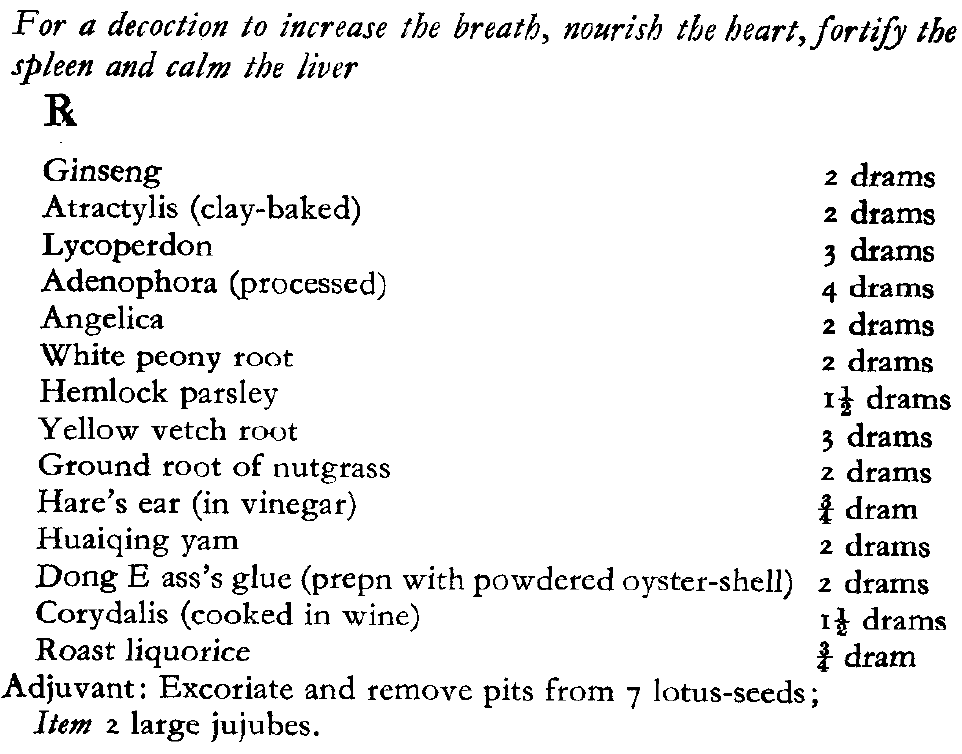
Compare that to the 1792 edition of the Chinese text, which also needs to be shown rather than described:
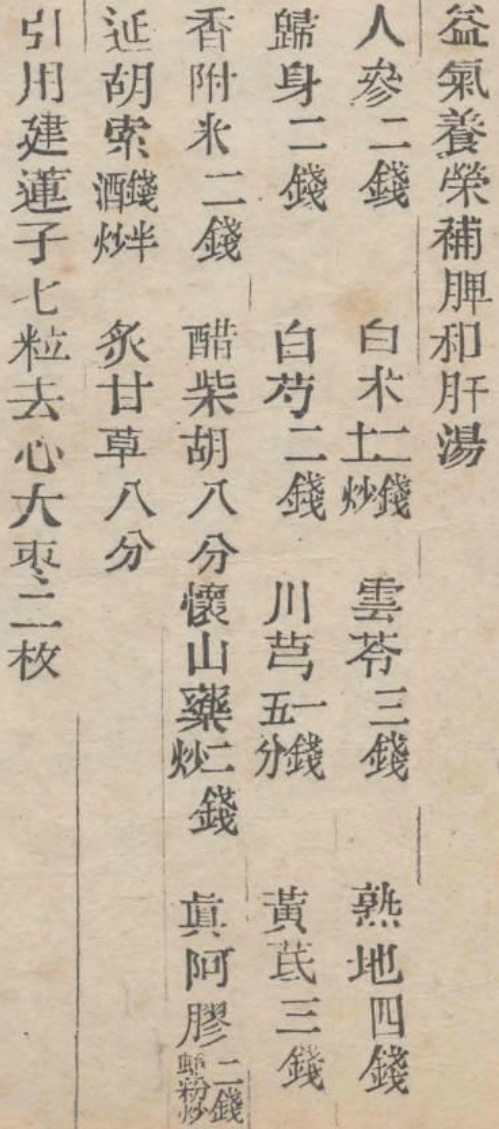
Part of the joy of this book as originally published is finding bits and pieces of things like this. In the original, the prescription was written precisely like a prescription would be written.
Yang
The Yangs translate 真正先生說得如神 as “this doctor must have second sight,” which is a pretty interesting translation of that concept.
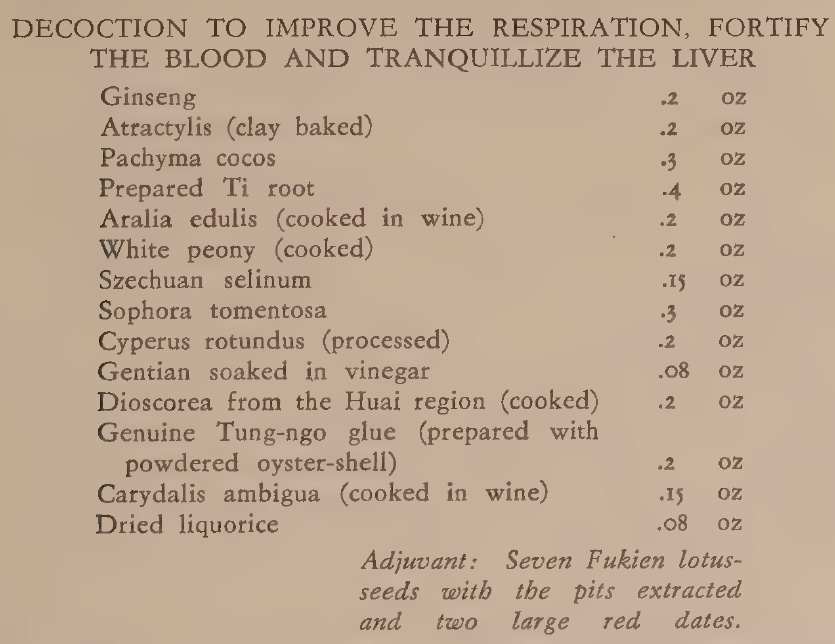
They also write out the prescription as a prescription, though it’s not quite as stylized as what Hawkes wrote:
Chinese Text
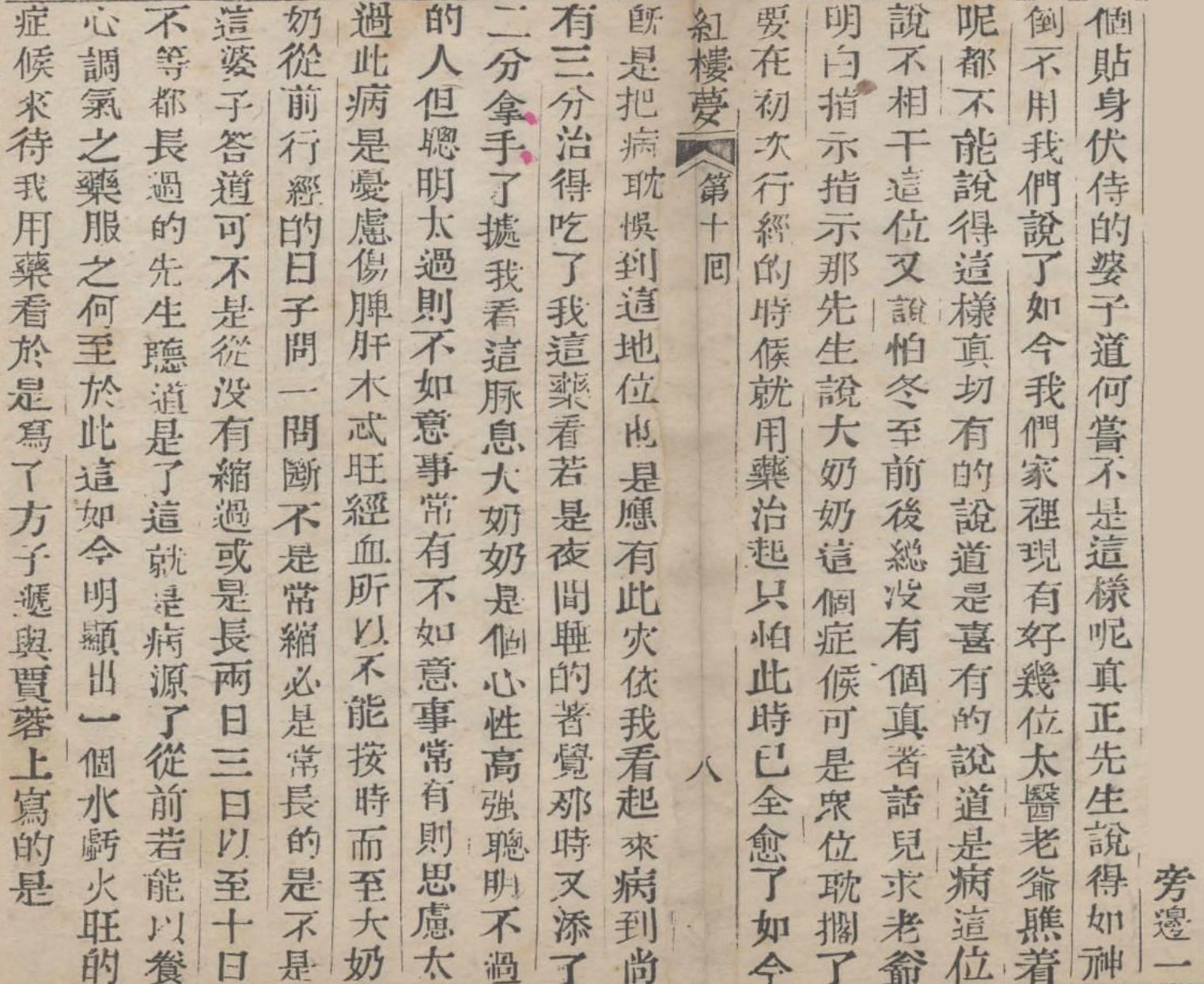
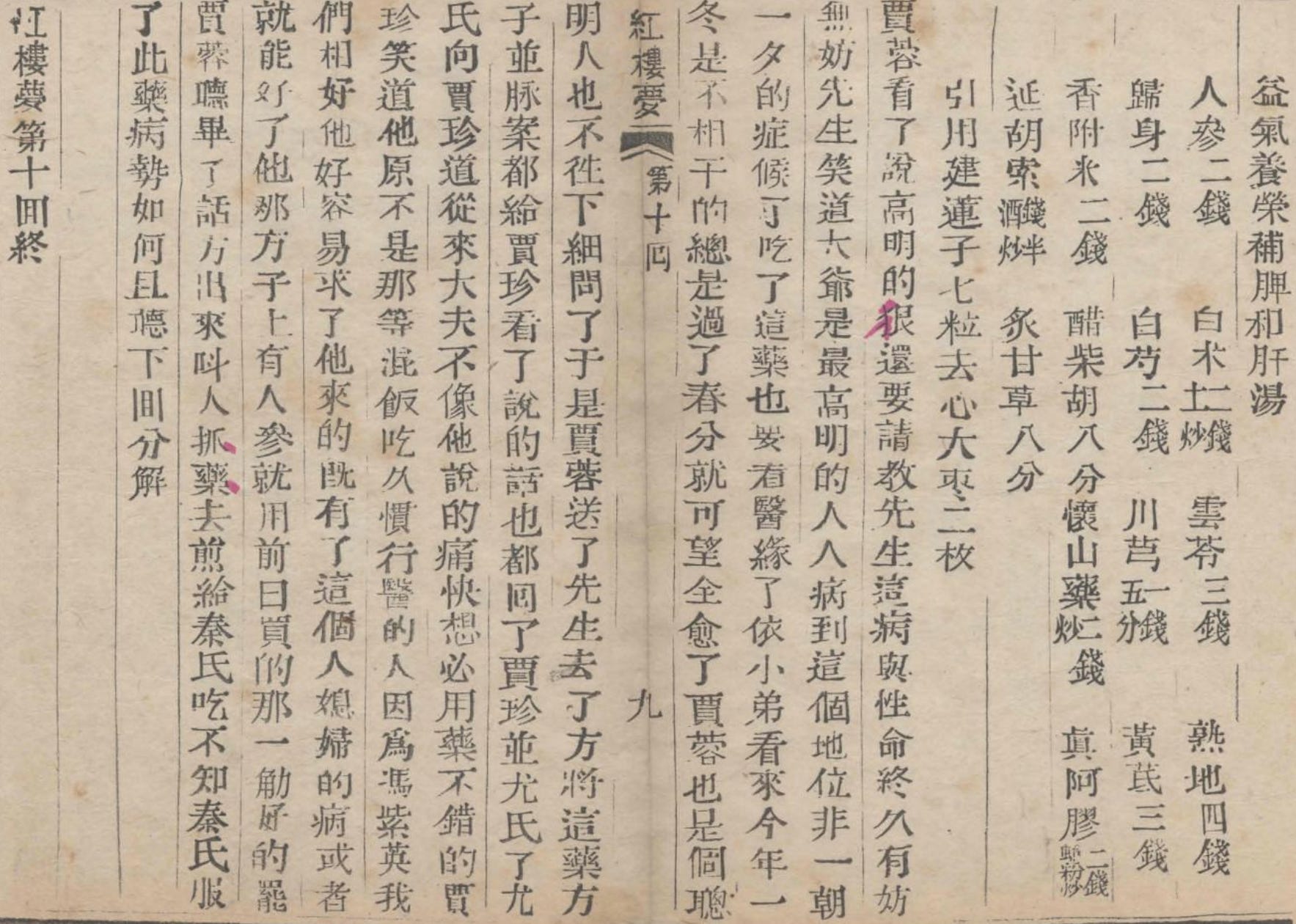
旁邊一個貼身伏侍的婆子道:「何嘗不是這樣呢!真正先生說得如神,倒不用我們說了。如今我們家裡現有好幾位太醫老爺瞧著呢,都不能說得這樣真切。有的說道是喜,有的說道是病,這位說不相干,這位又說怕冬至前後:總沒有個真著話兒。求老爺明白指示指示。」那先生說:「大奶奶這個症候,可是那眾位耽擱了!要在初次行經的時候就用藥治起,只怕此時已全愈了。如今既是把病耽誤到這地位,也是應有此災。依我看起來,病倒尚有三分治得。吃了我這藥看,若是夜間睡得著覺,那時又添了二分拿手了。據我看這脈息,大奶奶是個心性高強聰明不過的人。但聰明太過,則不如意事常有;不如意事常有,則思慮太過。此病是憂慮傷脾,肝木忒旺,經血所以不能按時而至。大奶奶從前行經的日子,問一問,斷不是常縮,必是常長的。是不是?」這婆子答道:「可不是?從沒有縮過,或是長兩日三日,以至十日不等,都長過的。」先生聽了道:「是了,這就是病源了。從前若能以養心調經之藥服之,何至於此!這如今明顯出一個水虧木旺的症候來。待用藥看看。」於是寫了方子,遞與賈蓉。上寫的是:
益氣養榮補脾和肝湯
人蔘二錢 白朮二錢(土炒) 雲苓三錢 熟地四錢 歸身二錢 白芍二錢 川芎一錢五分 黃蒠三錢 香附米二錢 醋柴胡八分 淮山藥二錢(炒) 真阿膠二錢(蛤粉炒) 延胡索錢半(酒炒) 炙甘草八分
引用建蓮子七粒(去心) 大棗二枚
賈蓉看了說:「高明的很。還要請教先生:這病與性命終久有妨無妨?」先生笑道:「大爺是最高明的人;人病到這個地位,非一朝一夕的症候了。吃了這藥,也要看醫緣了。依小弟看來,今年一冬是不相干的,總是過了春分,就可望全愈了。」賈蓉也是個聰明人,也不往下細問了
於是賈蓉送了先生去了,方將這藥方子並脈案都給賈珍看了,說的話,也都回了賈珍並尤氏了。尤氏向賈珍道:「從來大夫不像他說的痛快,想必用藥不錯的。」賈珍笑道:「他原不是那等混飯吃久慣行醫的人,因為馮紫英我們相好,他好容易求了他來的。既有了這個人,媳婦的病或者就能好了。他那方子上有人蔘,就用前日買的那一斤好的罷。」賈蓉聽畢了話,方出來叫人抓藥去,煎給秦氏吃。
不知秦氏服了此藥,病勢如何,且聽下回分解。
Translation Notes
真正先生說得如神 literally means “Truly, you, sir doctor, have said this as if you were God.”
The phrase 說怕冬至前後, or “we should fear the time around the winter solstice,” is a reference to the traditional Chinese belief that the winter solstice period could be a critical time for the seriously ill. This is because the winter solstice was the time of the turning point of yin and yang.
應有此災 means “this calamity was meant to be,” and seems to refer to a fatalistic view of Qin Keqing’s disease. Of course, it’s kind of odd to say this right after saying that her illness could have been solved if she had been treated earlier.
意事 usually means something that somebody desires. The implication here is that she desires a lot of things because of her intelligence but does not give them, leading naturally to disappointment.
One qian (錢) is something like 4 grams in the metric system, or about 0.15 ounces in the imperial system.
白朮 refers to the rhizome of a certain type of herb used in traditional Chinese medicine. The English equivalent is atractylode.
熟地 translates as the prepared rhizome of rehmannia.
歸身, or “angelica root,” is another plant root used in Chinese medicine. If you do a Google search for the term, you’ll see something that looks almost like a chopped mushroom.
一朝一夕 means one night and one day, or a short period of time.