


New here? I'm translating Dream of the Red Chamber, China's greatest novel, into modern English one scene at a time. Start with the Start Here guide, or meet the family on the Characters page.
Next week, the family in the novel spends the Lantern Festival writing riddles for each other. So this week’s episode asks a translator’s question: can a Chinese riddle survive in English?
Before you listen, try two riddles yourself. Neither one is from the novel.
Riddle 1
麻屋子,紅帳子,裡面住個白胖子。 Má wūzi, hóng zhàngzi, lǐmiàn zhù ge bái pàngzi. A rough little house, red curtains, and a fat white baby living inside. 打一物 (dǎ yí wù): the answer is a thing.
Riddle 2
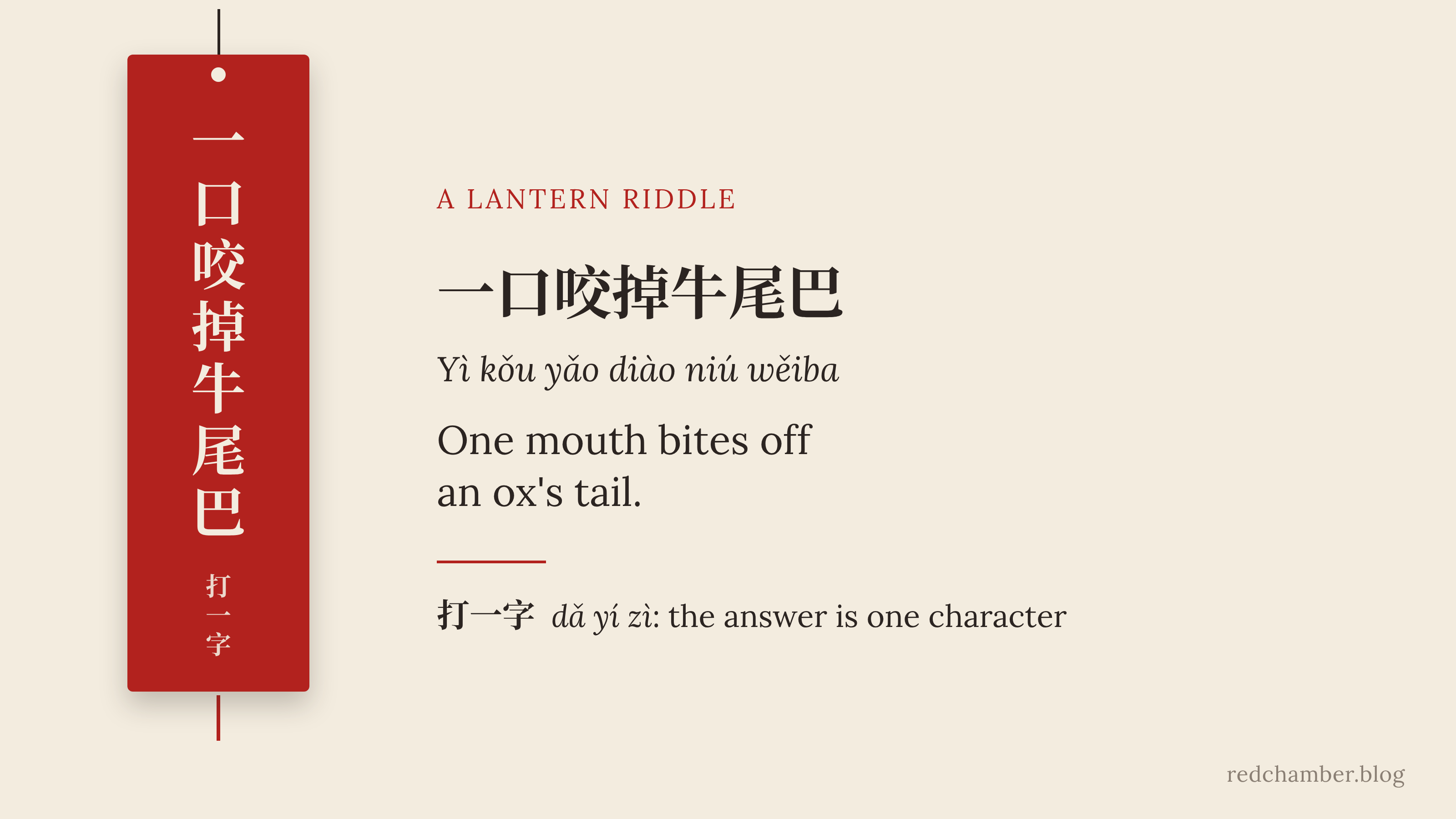
一口咬掉牛尾巴。 Yì kǒu yǎo diào niú wěiba. One mouth bites off an ox’s tail. 打一字 (dǎ yí zì): the answer is a character.
The parts of a riddle
Every Chinese riddle has three parts, and the names are worth knowing before next week:
謎面 (mímiàn), “the face”: the clue you see.
謎目 (mímù): the category line. 打一物 means the answer is a thing, and 打一字 means the answer is a single character. It’s the first clue, and beginners skip it.
謎底 (mídǐ), “the bottom”: the answer.
The answer to Riddle 1 is a peanut. The rough shell is the house, the red skin is the curtains, and the nut is the fat white baby. That’s an object riddle: a description in disguise, and it would work in any language.
Riddle 2 is different. It only works in Chinese, and the episode explains why.
On Friday, Daiyu gets the last word on Baoyu's sudden interest in Zen, and that passage is free for everyone. Subscribe and it comes straight to your inbox.


